What a Quality of Earnings Report Reveals — And Why Every Seller Needs One
The Document That Makes or Breaks Your Deal
If you are a business owner preparing to sell, there is one document that will have more impact on your transaction outcome than any other: the Quality of Earnings report. Not your tax returns. Not your internal financial statements. Not even the confidential information memorandum your advisor prepares. The QoE is the foundation upon which your entire deal is built — and yet most first-time sellers have never heard of it until they are already in the middle of a transaction.
At Bluefin Capital Advisors, we believe every seller should understand what a QoE reveals, why it matters, and — critically — why commissioning one before you go to market is one of the smartest investments you can make in your exit.
What a Quality of Earnings Report Actually Does
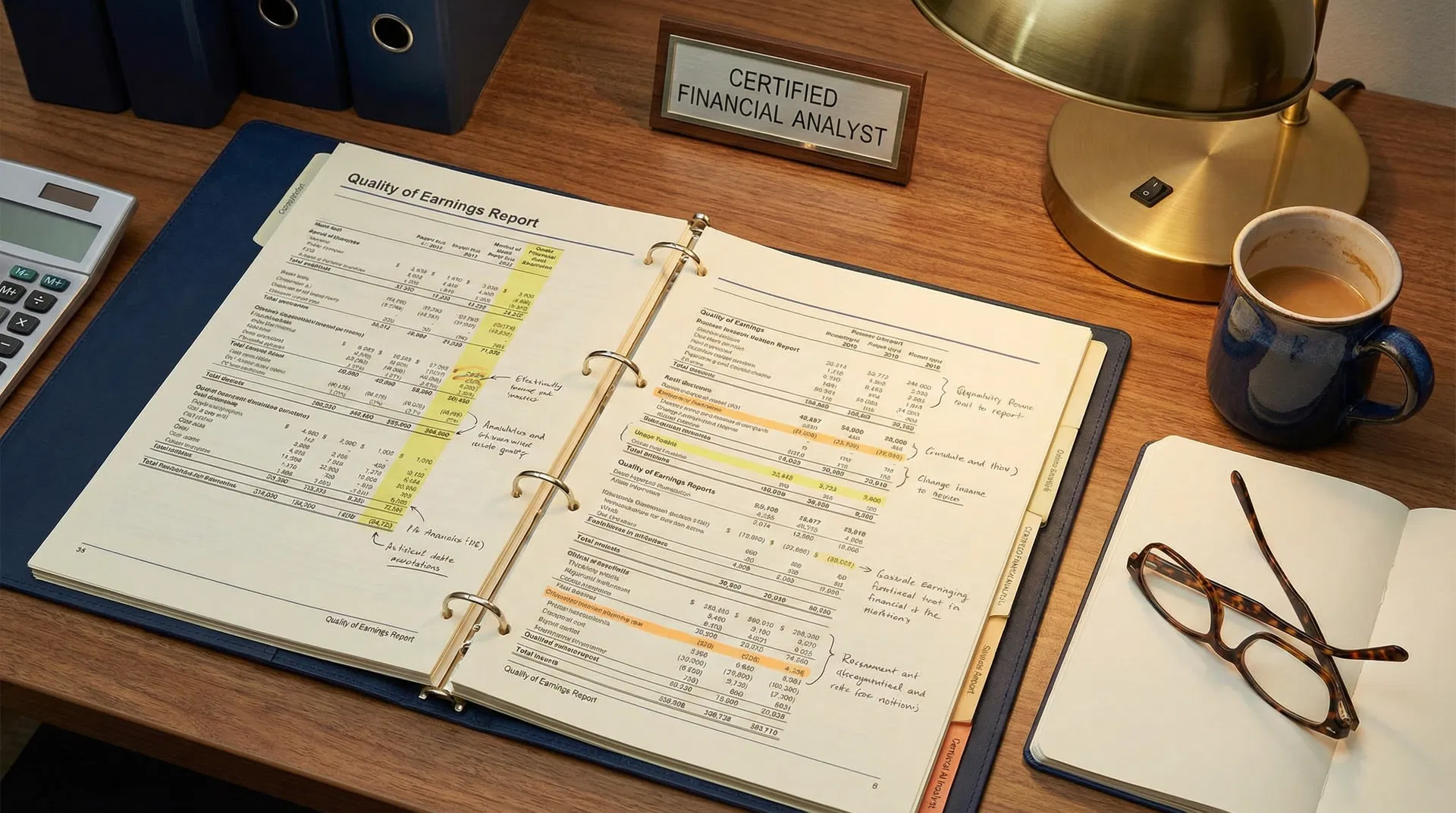
At its core, a QoE is an independent analysis of the sustainability and accuracy of your company's earnings. It goes far beyond what a standard audit provides. While an audit confirms that your financial statements conform to accounting standards, a QoE answers the question that every buyer is really asking: "Are these earnings real, and will they continue after I buy this business?"
A thorough QoE examines several critical areas. It normalizes your earnings by identifying and adjusting for one-time events, owner-related expenses, and non-recurring items that inflate or deflate your reported EBITDA. It analyzes the quality of your revenue — distinguishing between recurring, contractual revenue and one-time project work, and assessing customer concentration risk. It evaluates working capital trends to ensure the business is not being artificially propped up by timing differences or aggressive accounting. And it identifies potential risks that could affect future earnings, from pending litigation to regulatory exposure to key employee dependency.
Why Buyers Require It — And Why You Should Get One First
In today's M&A market, virtually every sophisticated buyer — whether private equity, strategic acquirer, or family office — will commission their own QoE as part of due diligence. This is non-negotiable. The question is whether you want to see those findings for the first time when the buyer presents them, or whether you want to know what they will find before you ever go to market.
The difference between a sell-side QoE and a buy-side QoE is not just timing — it is leverage. When you commission your own QoE before entering the market, you accomplish several things simultaneously. You identify and address potential red flags before a buyer discovers them. You build a credible, defensible earnings story that withstands scrutiny. You eliminate the uncertainty that causes buyers to build risk premiums into their offers. And you demonstrate to sophisticated buyers that you are a serious, well-prepared seller — which in itself commands respect and often better terms.
We recently worked with a client who did exactly this. They were preparing to go to market and ran their own QoE analysis. The report revealed gaps in their valuation story — add-backs that would not survive buyer scrutiny and revenue concentration that needed to be addressed. Instead of pressing forward and risking a repricing during due diligence, they pulled back, took twelve to eighteen months to close those gaps, and re-entered the market with a cleaner story and more defensible numbers. That discipline will pay off in a meaningfully higher transaction value.
What a QoE Typically Uncovers
In our experience, even well-run businesses are surprised by what a QoE reveals. Common findings include owner compensation that exceeds market rates — a legitimate add-back, but one that needs to be clearly documented and defensible. One-time expenses that were not properly categorized, making adjusted EBITDA appear higher than it actually is on a run-rate basis. Revenue that is more concentrated than the owner realized, with the top five customers representing a larger share of total revenue than expected. And working capital swings that suggest the business's cash flow is less predictable than the income statement implies.
None of these findings are necessarily deal-killers. But each one, if discovered by a buyer during due diligence rather than addressed proactively by the seller, becomes a negotiating lever that works against you. The buyer will use every finding to justify a lower price, a larger escrow, or more restrictive deal terms. A sell-side QoE takes those levers away.
The Investment That Pays for Itself Many Times Over
A sell-side QoE typically costs between $50,000 and $150,000 depending on the size and complexity of the business. That is a meaningful investment. But consider the alternative: a buyer discovers an issue during due diligence that reduces your valuation by $500,000 or $1 million. Or worse, the buyer walks away entirely because they lost confidence in your numbers. The QoE is not an expense — it is insurance against the most common and most costly risks in the transaction process.
At Bluefin, our Quality of Earnings service is designed specifically for middle-market business owners who want to enter the sale process from a position of strength. We work with you and your financial team to prepare for the analysis, manage the process, and ensure that the findings are addressed before they become obstacles.
Ready to understand what your earnings story really looks like? Schedule a free Exit Clarity Call to discuss how a sell-side QoE can protect and maximize your transaction value.
Ready to Take the Next Step?
Schedule a free consultation to discuss your exit strategy and business goals.
Schedule Free Consultation